
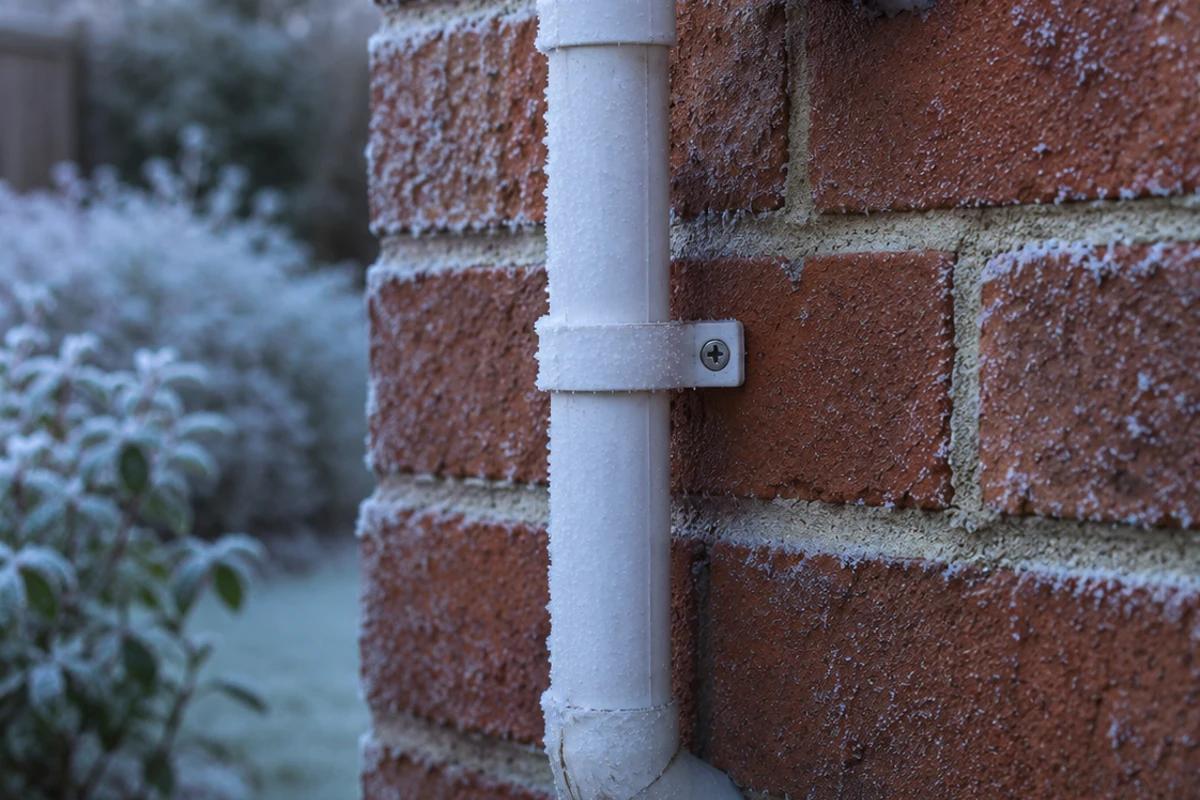
A frozen external condensate pipe is a common reason a condensing boiler stops during a cold snap. Ice can block the drain, leaving the boiler unable to operate normally. It does not automatically mean the boiler needs replacing. But freezing weather, gurgling and a fault code are clues, not a diagnosis – first check your appliance instructions and whether the pipe is safely accessible.
What is a condensate pipe, and why can it freeze?
A condensing boiler produces condensate as it extracts heat from its exhaust gases. A plastic pipe carries that liquid to a suitable waste connection or drain. Some installations drain indoors; others have an external section exposed to the weather.
During a prolonged spell below 0°C, liquid in an exposed section can freeze, especially around bends or the pipe outlet. The resulting blockage can cause the boiler to lock out. The air temperature alone does not tell you whether a particular pipe is frozen: exposure, drainage and the installation all matter.
The condensate drain is not the boiler flue, a gas pipe or a water-supply pipe. Do not pour water into a flue, remove its terminal or disconnect pipework. If you cannot confidently identify the condensate pipe from the instructions or installation information, ask an engineer.
Signs that make a frozen condensate pipe worth checking
- Timing: the boiler stopped during sustained freezing weather, particularly after an overnight frost.
- Pipe route: you know there is an external plastic condensate drain from the boiler.
- Sounds: gurgling or bubbling may accompany the shutdown, although other faults can make similar noises.
- Display: the boiler may show a fault or lockout message. Note the exact code and check the manual for your model.
No single fault code proves the pipe has frozen. Ignition and flame faults can also involve gas supply or components inside the appliance. Do not assume that a code seen in someone else's online video has the same cause on your boiler.
If taps also have little or no cold water, read our frozen water pipe guide. That is a different problem from a blocked condensate drain.
When you should not try to thaw it yourself
Only consider gentle thawing when the manufacturer's instructions allow it, you have identified the correct pipe, and the affected section is easily reached from ground level on firm, safe footing.
- Do not climb a ladder, lean from a window or stand on icy steps to reach a pipe.
- Do not proceed if the pipe is damaged, leaking, close to exposed electrical equipment or cannot be identified confidently.
- Never remove the boiler casing, cut or disconnect pipework, or interfere with the gas supply or flue.
- A gas smell or carbon monoxide alarm is an emergency, not a condensate-thawing task. Leave the property and call the National Gas Emergency Service on 0800 111 999 from outside in Great Britain. Seek urgent medical help if anyone is unwell.
How to thaw an accessible condensate pipe safely
- Check the boiler manufacturer's instructions first. If the pipe or procedure is unclear, stop and contact a Gas Safe registered engineer.
- Use warm water, never boiling water. Gently pour it over the outside of the accessible frozen section, particularly a bend or outlet where ice may collect. Alternatively, use a warm hot-water bottle against the section if the manufacturer permits it.
- Work gently and allow time for the ice to melt. Do not hit the pipe, push tools into it or use a blowtorch, naked flame, heat gun or chemical de-icer.
- Keep people away from the runoff. Water spilled onto paving can refreeze and create a slip hazard; do not continue if you cannot manage it safely.
- Once the blockage has cleared, follow the manual's reset instructions if a reset is needed. If the boiler does not restart, shows a continuing fault or locks out again, stop resetting it and arrange a diagnosis.
These steps are for the external condensate drain only. They are not instructions for thawing gas pipework or opening the boiler. Do not keep adding water to a pipe that remains blocked or damaged.
How to reduce the risk of it happening again
Ask your heating engineer to assess the condensate route, exposed length, drainage and suitable weatherproof insulation. A recurring freeze can indicate an arrangement that needs improving. Pipe sizing, rerouting and any protective equipment should be selected for the appliance and installation, rather than copied from a photograph.
Keep normal heating controls set appropriately for your home and follow the manufacturer's cold-weather advice. Do not assume the boiler's own frost-protection feature protects every external pipe. Avoid changing unfamiliar installer settings in an attempt to cure a blockage.
Before another freeze, use our cold-weather boiler checklist and keep your service record and manual handy.
When to contact JustFix
Contact JustFix boiler repairs if the pipe cannot be reached safely, you are unsure of the cause, or gentle thawing has not restored normal operation. Tell us the boiler make and model, the displayed message, when it stopped and whether you still have heating, hot water and cold water.
A safely taken photograph of the external pipe route and display can help explain the problem. A frozen drain can often be dealt with without replacing the boiler, but only an appropriate diagnosis can establish the cause and the work needed.
Sources and further guidance
- National Gas – emergency contacts.
- Worcester Bosch – how to thaw a frozen condensate pipe.
- Vaillant – understanding an F28 fault code. Always use the instructions for your own model.
Need a hand? Tell us what's going on and we'll take it from there.
Get help with your boiler